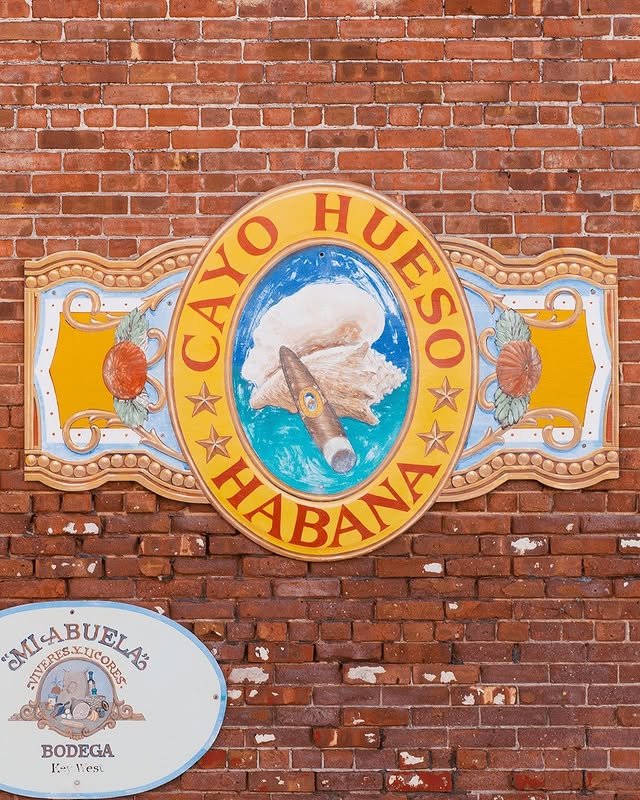
Discover the story of 410 Wall Street — a Mallory Square landmark tied to Key West's cigar industry, Cuban heritage, maritime trade, and waterfront history.
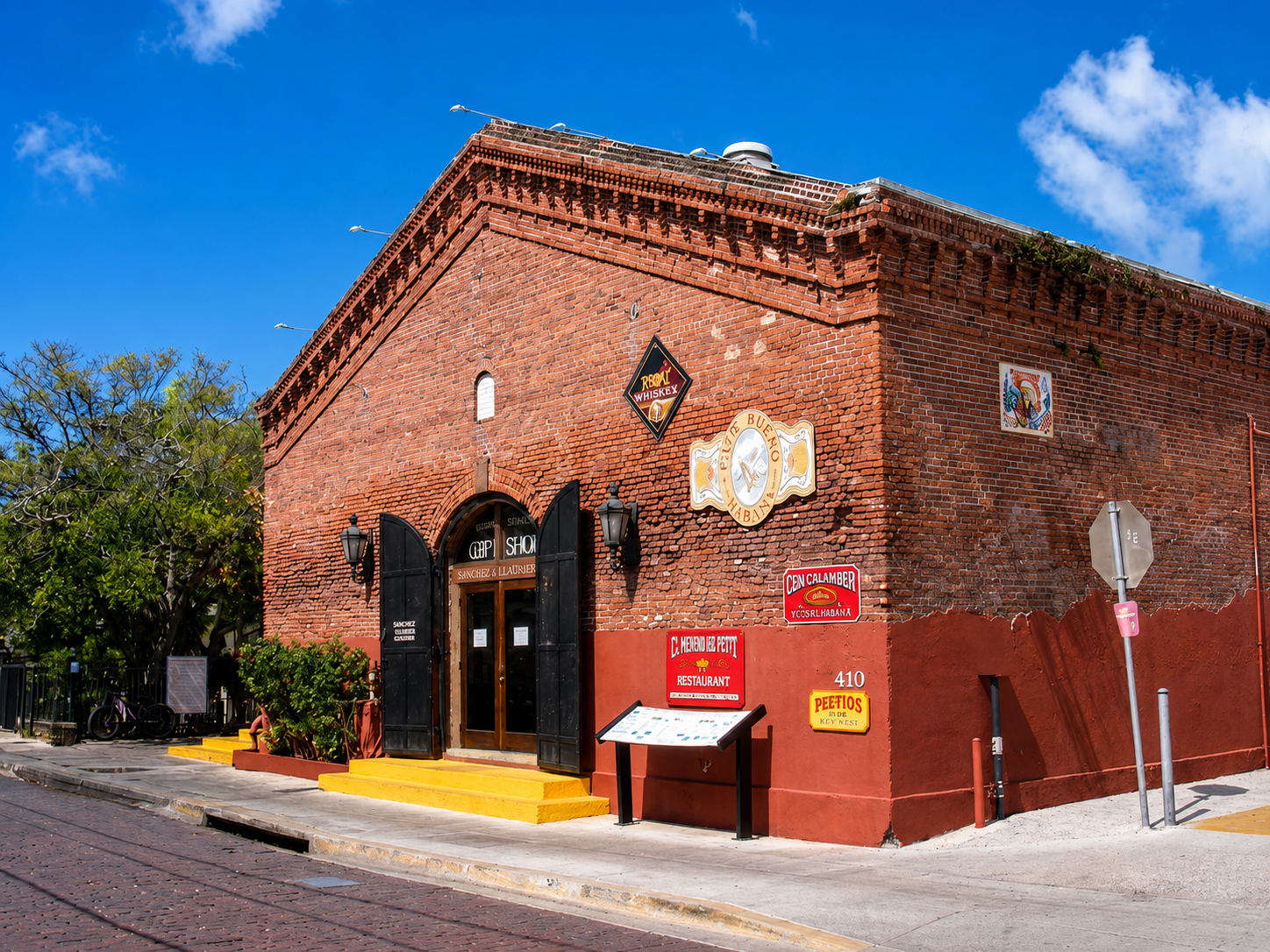
410 WALL STREET
The building at 410 Wall Street is the historic William Wall Warehouse, also known as the Wall & Co. building. Built around 1878–1879, this late-19th-century brick commercial structure stands at the center of Mallory Square and reflects Key West's history as a cigar town, maritime hub, military harbor, and Cuban-Conch cultural crossroads.
A marble plaque above the entrance reads "ERECTED A.D. 1879 Wall & Co." — a physical reminder of the people and trade that shaped this corner of Key West. Today the building is home to El Meson de Pepe and the Cayo Hueso y Habana Historeum, continuing to serve as a living bridge between the island's past and present.
1824
William Wall arrives in Key West
1831
Key West's first cigar factory founded
1879
Wall & Co. warehouse erected
Today
Home to El Meson de Pepe & the Historeum
THE WALL FAMILY STORY
William Wall, an Englishman, shipwrecked in Key West in 1824 when the island was still a small settlement with fewer than 600 residents. He chose to stay and became one of the island's early influential residents. In 1831, Wall helped pioneer Key West's cigar industry by establishing what is considered the island's first cigar factory.
His descendants later built the Wall & Co. warehouse around 1878–1879. The building became part of the commercial waterfront during a period when Key West was growing into "Cigar City USA," shaped by Cuban workers, cigar makers, merchants, and immigration arriving in large numbers — particularly after the Ten Years' War in Cuba.
The warehouse was far more than a storage facility. Its docks and large coal storage areas — known as "coal pockets" — helped supply the steamships that ran between Key West, Havana, New York, Tampa, and other ports. Its position on the harbor made it central to Key West's role as a transatlantic crossroads.
"ERECTED A.D. 1879 Wall & Co."
— Marble plaque, 410 Wall Street, Key West
KEY MOMENTS
From shipwrecking and cigar making to naval history and Cuban-Key West heritage, the William Wall Warehouse remains one of Mallory Square's most meaningful historic buildings.
1824
William Wall shipwrecks in Key West and chooses to stay.
1831
Wall establishes what is considered Key West's first cigar factory.
1878–1879
The Wall & Co. warehouse is built at 410 Wall Street.
Late 1800s
The building supports Key West's cigar, maritime, and waterfront trade.
1888–1897
The harbor is dredged to accommodate larger naval vessels.
1898
The building supports naval activity during the Spanish-American War era.
Today
The building houses El Meson de Pepe and the Cayo Hueso y Habana Historeum.
WATERFRONT COMMERCE
The William Wall Warehouse was part of Key West's active waterfront economy. The building included docks and large coal storage areas — known as "coal pockets" — that helped supply steamships traveling between Key West, Havana, New York, Tampa, and other ports.
Its location at the water's edge made it valuable for trade, transportation, and eventually naval use. When the U.S. Navy acquired it in the late 1880s, the harbor was dredged to accommodate larger vessels — including the USS Maine before its fateful voyage to Havana Harbor in 1898.
Learn About Key West & Cuba History →Coal storage and dockside access made the warehouse an essential stop for vessels crossing between Key West and Havana.
The U.S. Navy acquired and converted the warehouse in the late 1880s, using it as a strategic harbor installation.
The harbor was deepened to accommodate larger modern vessels during the period when the warehouse served naval operations.
The building's harbor proximity made it part of the military infrastructure during Key West's strategic role in the 1898 war.
CUBAN-KEY WEST HERITAGE
Key West's cigar industry grew rapidly in the 19th century, especially as Cuban exiles, workers, and cigar makers arrived in large numbers. The William Wall Warehouse remains connected to that story — a physical reminder of the people, trade routes, and cultural exchange that helped shape the island.
Thousands of skilled Cuban workers transformed Key West into the cigar capital of the United States in the late 1800s.
Cuban exiles in Key West organized and supported the independence movement, with figures like José Martí speaking at local gatherings.
Cuban food, music, family traditions, and the Spanish language became part of the island's identity through generations of cross-Straits migration.
DID YOU KNOW?
Key West Cigar & Building History
At its peak in the late 1800s, Key West was the largest city in Florida and the wealthiest city per capita in the United States — largely because of its booming cigar industry.
VISUAL HISTORY
Follow the William Wall Warehouse from its 1879 origins to its civic role in Key West and its present-day life at Mallory Square.
Click any photo to view full-screen with historical details.
Historical details based on City of Key West Mallory Square history records. Estimated image dates are clearly marked.
CONTRIBUTE TO HISTORY
If you are a descendant of the Wall family, a local historian, a researcher, or a Key West resident with archival photographs, documents, or memories related to the William Wall Warehouse, 410 Wall Street, or the early history of Mallory Square, we would love to hear from you.
Historical photos and stories help preserve the record of this building and its role in Key West's cigar trade, maritime history, and Cuban-Conch heritage for future generations.
Archival photographs of the building or Mallory Square
Documents, letters, or records related to Wall & Co.
Stories about the cigar industry or Key West waterfront
Personal memories of the building or surrounding area
SHARE YOUR PHOTOS OR RESEARCH
TODAY AT MALLORY SQUARE
Today, the historic building is home to El Meson de Pepe, a family-owned Cuban restaurant celebrating food, music, family, and hospitality, along with the Cayo Hueso y Habana Historeum, where guests can explore Cuban-Key West heritage through exhibits, photos, dioramas, cigar culture, and historic displays.

Cayo Hueso y Habana Historeum
Inside the Historic William Wall Warehouse
The Cayo Hueso y Habana Historeum celebrates Cuban and Key West heritage through photos, dioramas inspired by folk artist Mario Sanchez, cigar rolling demonstrations, and cultural exhibits — all inside the 1879 Wall & Co. building at Mallory Square.
A family-owned Cuban restaurant and living museum serving Cuban food, mojitos, live music, and cultural hospitality for over 40 years at Mallory Square.
A museum and cultural exhibit space celebrating Cuban-Key West heritage with historic photos, dioramas, cigar rolling demonstrations, and cultural storytelling.
An adult guest experience connected to Key West's centuries-old cigar heritage, available onsite at El Meson de Pepe.
The building's waterfront location makes it a prime stop before or after the world-famous Mallory Square Sunset Celebration.
SCREENSHOT & SAVE
410 Wall St. Look for the 1879 marble plaque above the entrance.
Inside El Meson de Pepe. View Cuban-Conch artifacts and dioramas.
The historic waterfront that once served steamships and naval vessels.
Experience the legacy of "Cigar City USA" where it all began.
QUESTIONS
VISIT US AT MALLORY SQUARE
Visit El Meson de Pepe at Mallory Square to enjoy Cuban food, mojitos, live music, museum exhibits, cigar culture, and one of Key West's most meaningful historic waterfront buildings.